

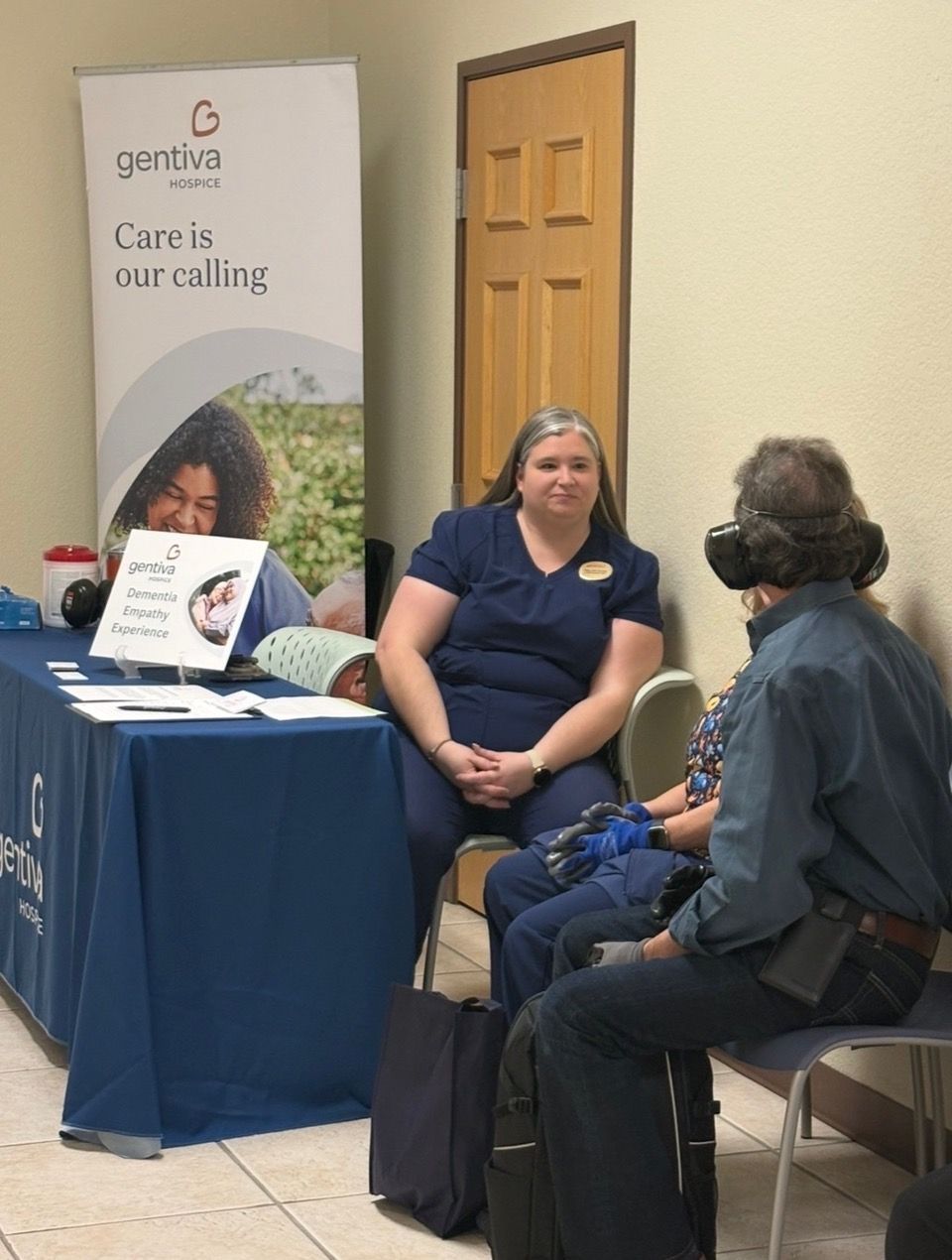
Gentiva Hospice and CenterWell Home Health, is bringing a dementia empathy simulation to the 16th annual Bell County Senior Expo, Tuesday, Sep. 22. Certified Dementia Practitioner, Jeanine Chatman, is certified to use and train the staff making it possible for Gentiva offering the experience to caregivers, healthcare professionals, and family members for the last year. Krystal Wall, senior hospice care consultant for Gentiva Hospice in Temple, said, “The experience is designed to help participants better understand what everyday life can feel like for someone living with dementia. Simple tasks that become unexpectedly challenging and participants experience some of the confusion, frustration, sensory changes, and difficulty processing information. The goal is to build empathy, patience, and understanding.” Brandi Gutierrez, a home health specialist with CenterWell Home Health, will be at the Senior Expo educating people on home health services and helping with the dementia empathy simulation program. She looks forward to meeting the seniors and hearing their stories. She also has advice for them regarding home care. Gutierrez said, “Reach out and learn what the companies offer. The hospitals will just give them all kinds of information and tell them to pick. They have a choice, and there's differences in the choice that they make for care.” Wall encourages families to reach out for assistance. She explained there are support groups and programs where they can get help with caregiving services, so they can get a break when they’re taking care of their loved one twenty-four seven. Wall said, “I hope they walk away with more patience and greater understanding that what we sometimes call a behavior, like a patient is acting out, maybe a person responding to confusion, fear, overstimulation, or difficulty communicating what they need. Sometimes changing their approach can make an enormous difference.” Wall said, “We're nationwide, and we provide different services in different states. Locally, we provide hospice and palliative care, and we partner with CenterWell on our home health.” Gentiva provides hospice and palliative home health care, cancer comfort, cardiac comfort, dementia care, and veterans care are provided by the tenured staff. Visit www.gentivahs.com for more information.
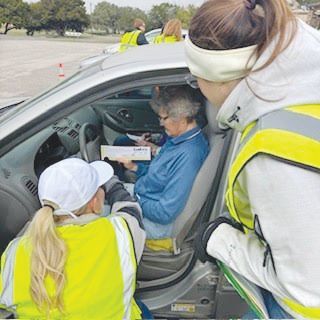
CarFit is coming to the 16th Annual Bell County Senior Expo on Sept. 22, with an interactive experience for the mature driver. Designed to help protect the driver’s life and body from traumatic injuries behind the wheel they address line of sight, seat belt placement, and more. Kristen McBride, a nurse and trauma injury prevention coordinator for Baylor Scott and White Medical Center in Temple, said, “I do a lot of community outreach with different injury prevention initiatives, and safe driving is one of them. Janet has the mature driver safety program, and trained me to be one of the coordinators. She does these presentations all the time.” Janet Hoelscher, with Texas A&M AgriLife, the mature driver program, said, “I am the state coordinator for CarFit for the state of Texas. Which means that I attend meetings with everyone in all the other 50 states about CarFit. We work together to help make CarFit better.” As drivers age, their height and flexibility change. Hoelscher continued, “CarFit is a fast, fun, and free way to learn how well your vehicle fits you. This program explores strategies to improve your safety and mobility behind the wheel.” To assure drivers, this program exists to keep drivers on the road, not take them off it. McBride said, “About the program, there's nothing punitive about it. We are not here to assess their driving skills, and certainly not here to take their canes away.” Hoelscher said, “As we age, things start changing, and driving injuries are a risk. So, the changes in vision, flexibility, strength, height, and range of motion can reduce a person's comfort and control on the road. CarFit can help a person maintain their independence.” Because many households have more than one driver for the same vehicle, CarFit teaches drivers what they need to know to adjust for them. Hoelscher said, “We teach individuals how to make the adjustments themselves, so if someone changes anything they can change the settings back. Everyone needs adjustments specifically for them. We teach them how to adjust it themselves.” CarFit was developed in 2006 by AARP and the Occupational Therapy Association (AOTA) to help drivers stay comfortable and safer on the road longer. CarFit is a TxDOT grant-funded program employed by Texas A&M University. CarFit was designed for those 55 and older but CarFit is for anyone who drives a vehicle. They have seen it help drivers 16 and up. If you can’t make it to the Senior Expo event, CarFit can be invited to your organization, church, or other regular gathering place. Visit their website at carfit.org .
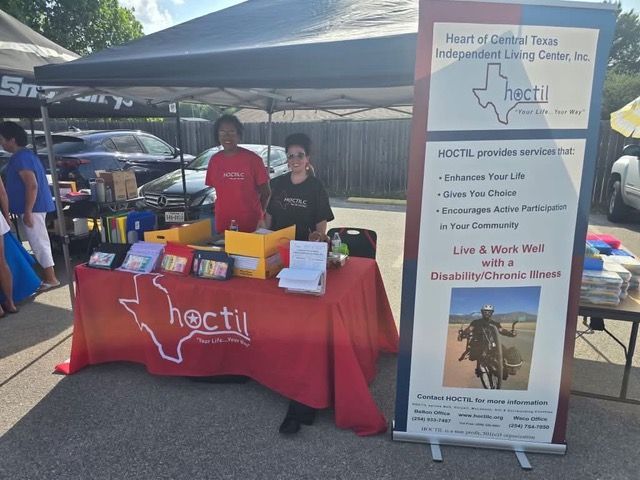
Heart of Central Texas Independent Living (HOCTILC) is coming to the 16th Annual Bell County Senior Expo on Sept. 22, with an interactive experience for daily life. Carma Franco, their assistive technology person, will man the interactive experiences. Melissa Ingriola, executive director for HOCTILC said, “We serve individuals of all ages with disabilities, and that includes chronic illness. The goal is to stay out of institutional care, and to stay independent in your home and community. And from that, kind of branches off to all of our different services.” HOCTILC will have two tables set up at the Senior Expo event. One to learn about their services, and the other with assistive technology. Ingriola explained, if someone comes with a hearing issue, they have amplification devices that you can wear. They're Bluetooth, and so you don't necessarily have to have a hearing aid. You wear it like earphones or like earbuds, and it will pick up on noises that maybe you couldn't hear before.” She said vision issues can be helped too. “There are a lot of magnifying devices now, bigger monitor type things, or they can be tinier magnifiers. There are devices that could help with macular degeneration. We're helping someone right now, she just wanted to be able to go to the store and know what she was shopping for.” HOCTILC helps their consumers find what they need at no cost to the consumer. Ingriola said, “We don't charge for any of our services. They're all free of charge. And to start services with us, you don't have to prove your disability. It's all self-declared.” HOCTILC makes available help in the language needed for their consumers, including sign language. Their summer intern and Franco speak Spanish. To read more about what HOCTILC does, such as, advocacy, peer support, transition assistance, employment, training, and more, visit their website at www.hoctilc.org . Mark your calendars for The Rusty Awards, held in honor of Judy Morales’ son and supported by HOCTILC, to be held on Oct. 20, 2026. Read more at bccpdtx.org/rusty-awards/ .

Discover exactly what the Belton Journal covers — local government, BISD news, Belton Tigers, Broncos and Dragons sports, and how to subscribe for print or digital.

Discover comprehensive local news reporting services in Belton, TX covering community events, city council meetings, and breaking stories that matter to residents.
Explore detailed sports coverage services in Temple, TX featuring high school athletics, Friday Night Football, and championship competitions across Bell County schools.
Learn about event coverage services in Bell County, TX documenting community celebrations, award ceremonies, expos, and special occasions that bring residents together.
Understand obituary services in Belton, TX providing respectful publication of death notices, funeral information, and memorial tributes for community members and families.
Explore special publications in Belton, TX featuring themed editions on home and garden, graduation, seasonal events, and community topics that serve specific reader interests.
Discover advertising services in Temple, TX offering local businesses targeted print and digital placement opportunities to reach engaged community readers and customers.